Article originally published January 2026 in The Monitor publication.
The Damaging Effects of GERD – and the Signs You Shouldn’t Ignore
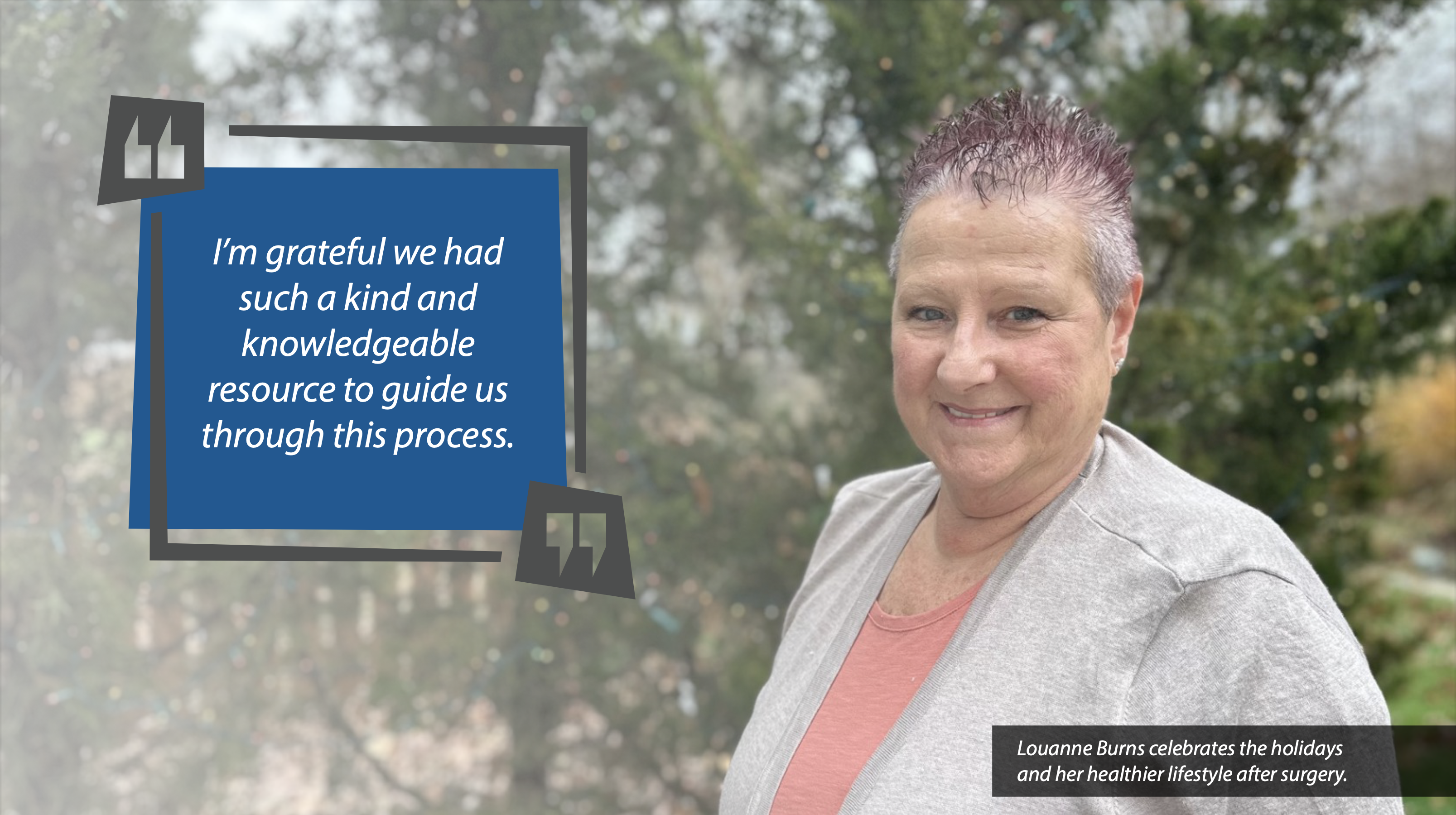
Louanne Burns, 67, had experienced plenty of heartburn over the years, especially when eating the usual triggers, like pepperoni pizza or pasta with tomato sauce. After a while, however, the sensation stopped. Gone were the days of sleepless nights, sitting up in bed or taking antacids at odd hours. What she didn’t realize, however, was that her acid reflux never truly went away – and it had been silently causing damage for years.
“When patients go for long periods with chronic or frequent heartburn, acid reflux can actually damage nerve endings in the esophagus, which is the tube that connects the mouth to the stomach,” explained Heather Luttrell, RN, BSN, who is the clinical coordinator of the Fairfield Medical Heartburn Center. “Even if you don’t feel that common burning behind the sternum, it’s very possible that you are still experiencing reflux – often with what we call atypical symptoms.”
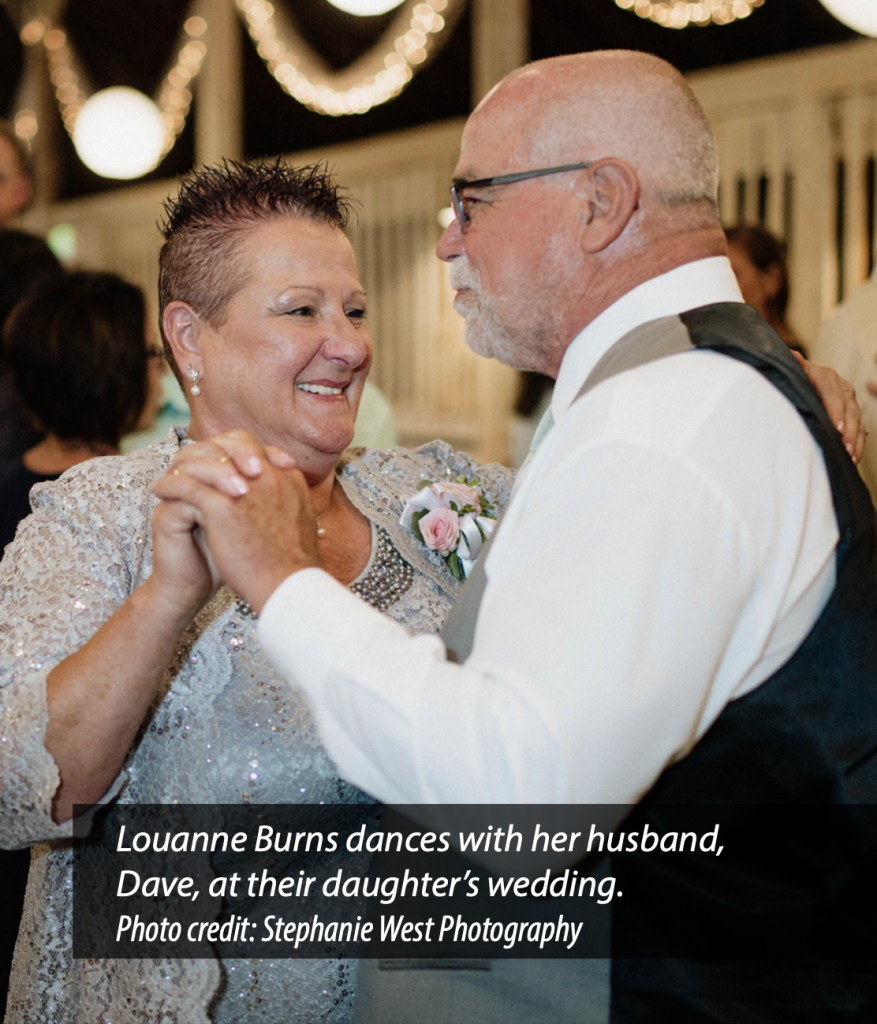 When meeting with Heather for a free consultation, Louanne was surprised to learn that she did have symptoms of GERD (gastroesophageal reflux disease), many of which she never even recognized. Uncommon signs like coughing while eating or frequent throat clearing at night were easy enough to ignore, but when she began to have trouble swallowing, the red flags became clearer.
“Early last year, food – especially heavier meals, like meat or bread – would stick in my throat every now and again. I would swallow, and it felt like the bite would get lodged just above my stomach,” Louanne explained. “I wouldn’t be able to eat any more until I cleared it, but then I would be back to normal.”
With a busy season ahead, Louanne waited to seek medical attention. In the homestretch of planning her daughter’s wedding, Louanne didn’t feel it was necessary to add an additional layer of stress to an already demanding schedule. She was, after all, completely fine when not experiencing the unpleasant sensation. Unfortunately, on her daughter’s big day, she had another episode that couldn’t be ignored.
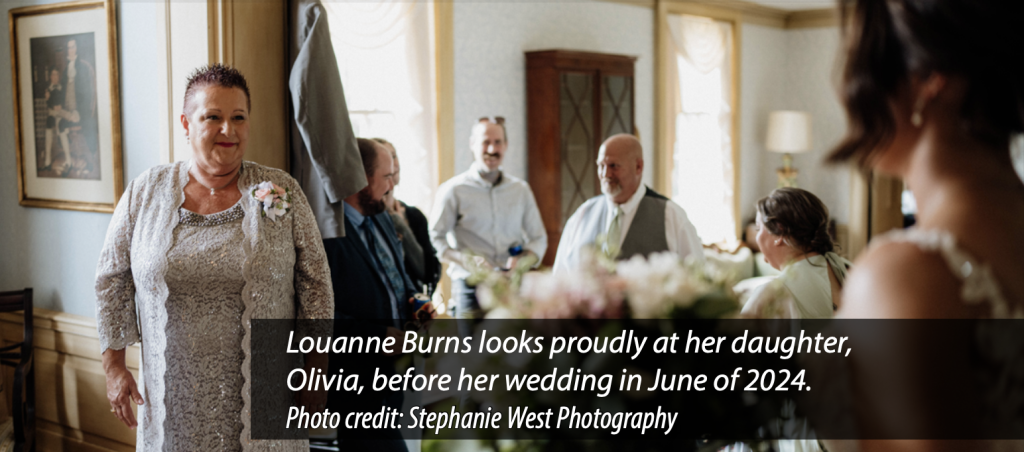 At the urging of her recently married daughter, Louanne promptly called to schedule an EGD, or an upper scope of the esophagus, stomach and first part of the small intestine. During the procedure, which involves passing a small camera through the digestive tract, the doctor found and corrected a narrowing of the esophagus, or stricture, caused by a build-up of scar tissue. Louanne also had significant inflammation in the lining of her esophagus: Both findings were tell-tale signs of her silent acid reflux. With proof of advanced GERD in hand, she buckled down to resolve the issue before her repeated scope in three months.
For Louanne, meeting with Heather and the Fairfield Medical Heartburn Center helped her gain clarity around the diagnosis. During their initial visit, they talked through what was happening, why it was happening, and how to manage or prevent future complications associated with GERD. In addition to understanding the disease process and how her anatomy played a role, Louanne also learned the importance of taking heartburn medications correctly as well as key lifestyle changes to help reduce reflux.
When Louanne returned for her second scope after three months of treatment, the inflammation in her esophagus had resolved. During this procedure, Isabel Manzanillo- DeVore, DO, of FHP Gastroenterology and Fairfield Medical Center’s Endoscopy team were able to take biopsies to rule out conditions like esophageal cancer and immune-mediated inflammation. While the results came back negative for those conditions, Louanne was diagnosed with Barrett’s esophagus, or pre-cancerous changes to the cells damaged by her acid reflux. Much like a colonoscopy, protocol includes routine screenings every few years to ensure the condition isn’t progressing.
“Of course I didn’t want to have Barrett’s esophagus, but it’s encouraging to know I’m being proactive,” Louanne shared. “After talking with Heather and Dr. Manzanillo, I decided to pursue surgery to correct the root cause of my reflux instead of relying on medications for the rest of my life. Once I knew there was a problem, I could work on fixing it.”
Louanne’s next step in her treatment plan included visiting Jeffrey Yenchar, MD, of FHP General Surgery, who explained surgical options to correct her large hiatal hernia and strengthen her esophageal sphincter. These anatomical fixes – one to keep the stomach from pushing upward into the chest cavity and the other to prevent digestive acid from entering the esophagus – can resolve reflux and eliminate the need for medication management. Nearly a year after she began having trouble swallowing, Louanne underwent robotic Nissen fundoplication with Dr. Yenchar – a decision she doesn’t regret.
“This surgery and Dr. Yenchar taught me to eat more mindfully by taking smaller bites, chewing more thoroughly and stopping when I feel full – between my recovery and lifestyle changes, I lost weight and started myself on a path to healthier living.”
Louanne’s positive experience even led her husband, Dave, to schedule an upper scope of his own. Diagnosed with GERD in his late thirties, Dave had been on heartburn medications for three decades, but it never occurred to him that another procedure may be in order. This – coupled with a family history of esophageal cancer and other risk factors like his age, sex, and race – was enough for him to take the plunge. Fortunately, everything came back normal, and they are grateful for the peace of mind.
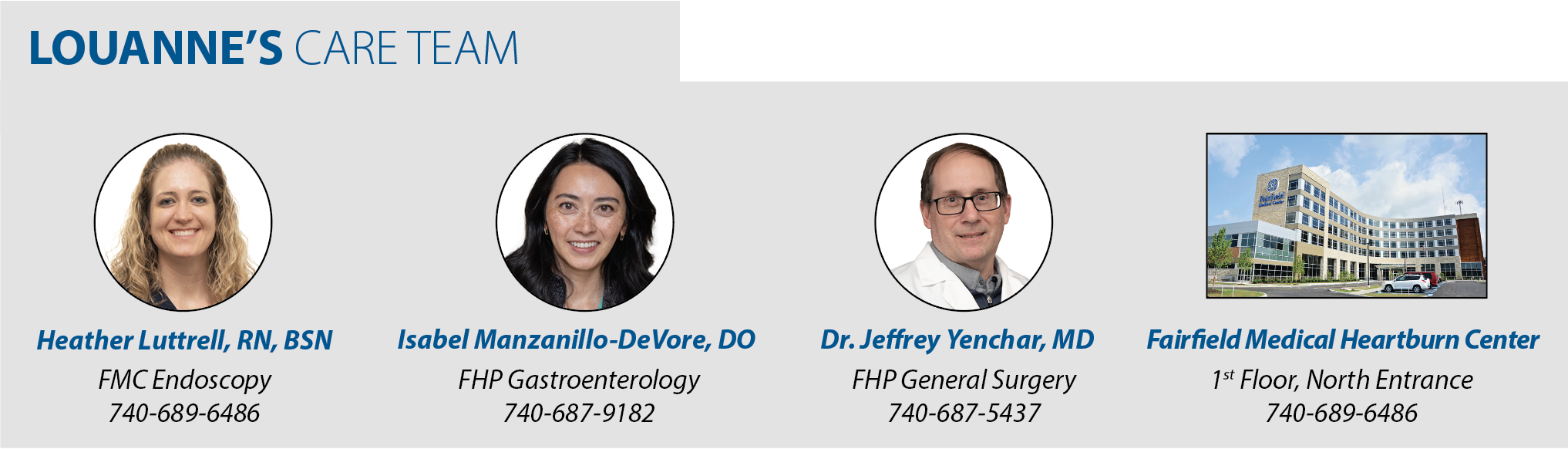
If you experience frequent heartburn, or if you have a history of frequent heartburn that has resolved without intervention, talk to your healthcare provider or contact the Fairfield Medical Heartburn Center for a free consultation at 740-689-6486.