

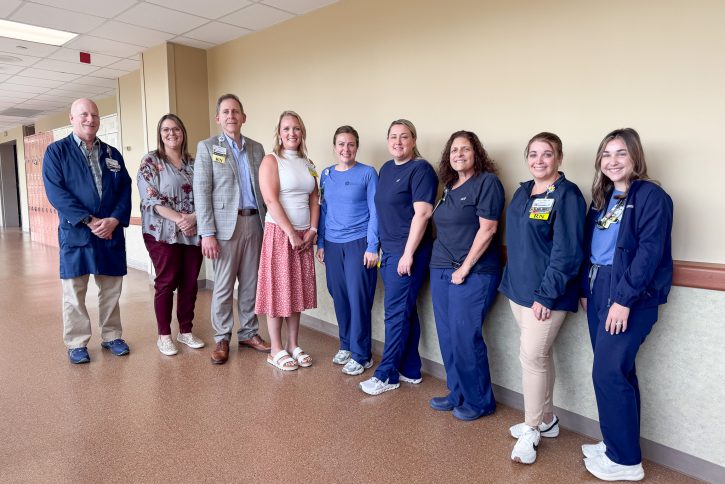
Central line associated-blood stream infections, which occur when germs enter the bloodstream through a central venous catheter, can pose a serious health risk for patients, causing sepsis, organ failure and even death. CLABSI prevention is a top priority for FMC and on June 10, the organization celebrated an impressive milestone: Two consecutive years with zero CLABSI incidents. Even more impressive, FMC’s CLABSI rate is among the lowest in the nation, according to Becker’s Hospital Review. This milestone could not have been accomplished without the hard work of FMC’s CLABSI team, which is made up of providers and clinical staff from Critical Care, Quality Excellence and Infection Control.
“This accomplishment represents countless daily decisions, from multidisciplinary rounds that challenge line necessity, to meticulous line maintenance, CHG bathing compliance, and ongoing auditing and accountability,” said ICU Manager Nicole Rohr. “It demonstrates what is possible when nurses, providers, infection prevention specialists, and support teams work together with a shared focus on delivering the safest care possible. Most importantly, every day without a CLABSI means fewer complications, shorter recoveries, and better outcomes for the patients and families who trust us with their care.”
Dr. Andrew Dagg-Murry, FHP Infectious Disease, agreed that the process was a team effort. “We have tried many things over the years to avoid catheter-related blood stream infections, including fancy types of coated lines, but the most important factors are placing the lines with maximum sterility, meticulous care of the line after placement and removing the lines as soon as possible when not needed,” he said.
A high CLABSI rate not only negatively affects the health and well-being of patients, but it has a significant impact on a hospital’s Centers for Medicaid and Medicare Services (CMS) star rating, and can result in a 1% payment reduction penalty from CMS. We are proud of the hard work this team has done to identify areas of improvement, educate staff on prevention and break the chain of CLABSI.